

When members tell us what Optiml did for them, you'd expect the answers to be about tax. Lower lifetime tax. A smarter RRSP drawdown. A better CPP start age.
We hear those. But one of the most common things members tell us is different. Optiml showed them they could spend more than they thought.
That's my favourite thing we hear, by a distance. It's also the reason this post exists.
For forty years, the advice points one way. Save more. Invest early. Live below your means. It's good advice, and it works. But somewhere along the way, a lot of disciplined savers turn the means into the goal. The pile gets bigger, and bigger, and nobody ever sits down to decide what it's for.
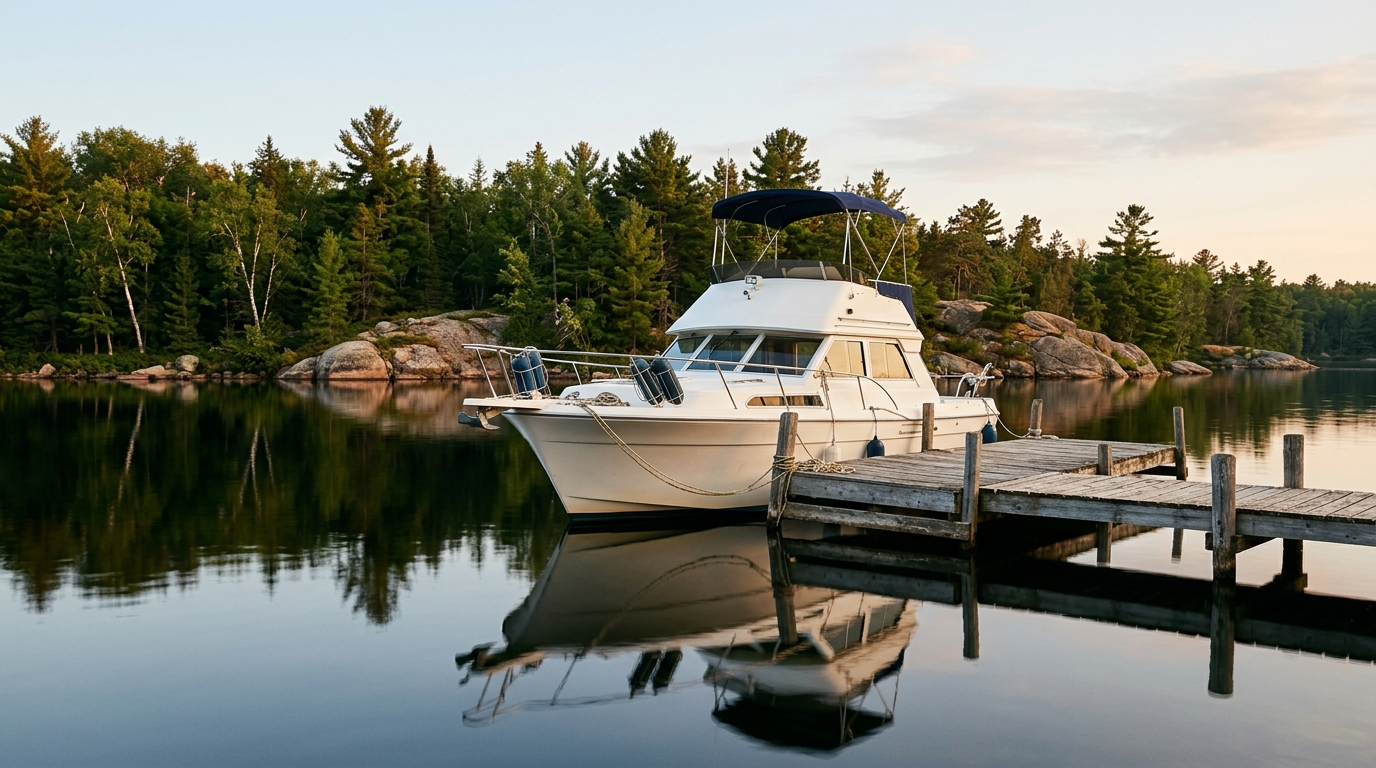
If you've done the saving, your plan's next job is to show you what you can spend. And if the answer is yes, buy the boat.
Your Most Active Years Come First
Life is short. That's the usual way to put it, but it isn't the useful version. The useful version is that the healthiest, most active stretch of retirement is shorter than the plan it sits inside, and it's weighted to the front.
Statistics Canada measures this with health-adjusted life expectancy (HALE), an estimate of the years a person can expect to spend in good health. In its January 2026 release, HALE at age 65 was 15.3 years in 2023, with 14.7 for men and 15.8 for women.
Now look at a typical retirement plan. It runs from 65 to 90 or 95, so 25 to 30 years. Fifteen good-health years covers about half of a 30-year plan. That's the stretch where you're most able to get out on the water, walk the trail, or drive to the other side of the country.
Spending follows the same shape. We've written before about how retirement spending isn't flat. The go-go years run heavier on travel and experiences, the slow-go years ease off, and the no-go years are simpler still. Optiml models that curve directly, so a heavier early budget is part of the plan instead of a guess.
Put those together and the timing question answers itself. A boat bought at 65 gets a lot of summers. The same boat bought at 78 gets far fewer. Same price, very different purchase.
Saving Still Matters
None of this is an argument against saving. Saving, investing and living below your means are how you got here. For most of your working life, they're exactly right.
And this isn't a problem every Canadian has. Plenty of households draw their savings down through retirement exactly as intended. This post is for a narrower group. It's for the disciplined saver who built a strong position and still can't flip the switch. If you're not sure which group you're in, we covered how to know if you're saving too much for retirement in detail.
The habit that built the pile doesn't switch off at 65. After decades of treating every dollar spent as a dollar lost, a big purchase feels like a risk even when the math says it isn't. We wrote about that feeling in Stop Feeling Guilty and Spend More in Retirement. The short version is that feeling you can't afford something and actually being unable to afford it are two different things.
The Half of the Plan Nobody Builds
Fidelity Investments Canada's 21st annual Retirement Report surveyed 2,000 Canadians with a median age of 62. Just 18% of retirees and 8% of pre-retirees have a detailed decumulation plan.
That means more than four in five retirees are drawing on their savings without a detailed plan for the spending side. Among people still working, it's more than nine in ten.
Without that plan, the default is to keep the pile growing. Every withdrawal feels like a leak. Every big purchase feels like a threat to the future. So the boat stays on the someday list, year after year.
A plan that covers the spending side tells you what's safe, and knowing what's safe is what lets you act.
That's why we built goal planning and Compare Plans into Optiml, and why we've been asking can you spend more in retirement? for a while now. The question that matters most in retirement isn't how much you've saved. It's how much you can spend, and on what.
Case Study: Should Lynn and Rob Buy the Boat?
Consider a hypothetical couple, Lynn and Rob, both 61 and living in Ontario. They're a modelled scenario, not a real member, but the shape of their situation is common among careful savers.
Rob has wanted a boat for about fifteen years. A used cruiser for the lake, around $85,000. It never makes the budget, because the budget was built to protect the pile.
Step 1: Add the Boat to the Plan
Optiml's Goals section has a Lifestyle & Leisure category, and the Boat goal is built for exactly this. It's available on every plan, Essentials included.
Lynn and Rob enter:
- Purchase price: $85,000
- Purchase year: 2030, the year they retire
- Financing: none to start. The goal can take a loan amount, interest rate and monthly payment if they want to test that later.
- Track it as an asset: yes, with a depreciation rate, so the boat shows up in their net worth at a realistic value
- Sell it later: in 2042, when they're 77 and heading into slower years
Living expenses in Optiml are customizable by category, so they also add about $6,000 a year for insurance, fuel and storage. A boat has running costs. The plan should carry them.
Step 2: Put the Two Plans Side by Side
Next, they build two plans and open Compare Plans, a Pro+ feature.
- Plan A, the cautious plan: their current $75,000 a year, no boat.
- Plan B, the boat plan: the Boat goal added, running on the Max Spend strategy.
Max Spend focuses on maximizing your retirement lifestyle. It finds the highest total lifetime spending the plan can support while making sure every expense is covered. If Lynn and Rob want to leave a specific amount to their kids, Set Value lets them set a target estate and maximizes spending above it. We compared all three strategies in Max Value, Max Spend, or Set Value.
Side by side, the questions get concrete. Is every year of the lifestyle still funded with the boat in it? How much total spending does each plan support? Where does the after-tax estate land?
For disciplined savers, this is often where the pattern members describe shows up. The cautious plan was built to protect the pile. The Max Spend plan shows how much the pile can actually support.
Step 3: Stress-Test the Boat
A plan that works on average isn't enough to write an $85,000 cheque. So the last check is the Success Score, also on Pro+. It stress-tests the plan against 50 market scenarios selected from more than 50,000 generated return paths, good markets and bad ones.
If the boat plan's Success Score holds up, the boat isn't a gamble. It's in the plan. If the score drops further than they're comfortable with, they've learned that before spending a dollar, and they know exactly which levers to pull next.
If It's Not Yet, the Plan Shows the Path
Sometimes the answer on day one is no. That's still useful, because the same plan that shows the gap also shows what closes it. Each of these is one change and one more plan in Compare Plans.
- A later purchase year. Move the boat from 2030 to 2032 and let two more years of growth do some of the work.
- Finance it. Enter a loan amount, interest rate and monthly payment in the Boat goal and see whether spreading the cost fits better than paying cash.
- A smaller boat now. A $50,000 boat at 65 might fit where an $85,000 one doesn't.
- Sell it sooner. Set an earlier sale year and see how it changes the picture.
- Work a little longer. Retiring at 66 instead of 65 adds a year of income and takes a year off the drawdown.
- A different strategy. Every Optiml plan models the optimal withdrawal order across your RRSP, TFSA and non-registered accounts. Switching strategy, or setting an estate target with Set Value, changes how much room the plan has.
This isn't permission to spend recklessly. It's permission with a path attached. "Not yet" turns into a year, a price or a trade-off you chose, instead of "someday."
The Bottom Line
Saving hard, investing well and living below your means built your retirement. They were never the point of it.
We get it in our heads to make the pile bigger and bigger, and somewhere along the way we forget what it was for. It was for the trips, the family time and the summers on the lake. It was for the boat.
If you want a first look at your own numbers, Optiml Lite is free. When you're ready to add the boat, the Boat goal is on every plan, and Compare Plans and the Success Score come with Pro+. You can try it free for 14 days.
Retirement isn't about how big the pile gets. It's about what the pile lets you do.
Buy the boat.
Ready to optimize your retirement plan?
Join thousands of Canadians making smarter financial decisions with Optiml.
Start Free Trial